

I’ve been spending the last while finding out about the different models that are being used by NGOs in Burundi to train local farmers in improved farming techniques and good land management. There is lots of good work going on out there, but as far as I can see, it comes down to a couple of main options – Farming Field Schools (FFS), or PIPS ( from the French Plan Integré de Paysan) Here’s a synopsis of what the two model’s involved:
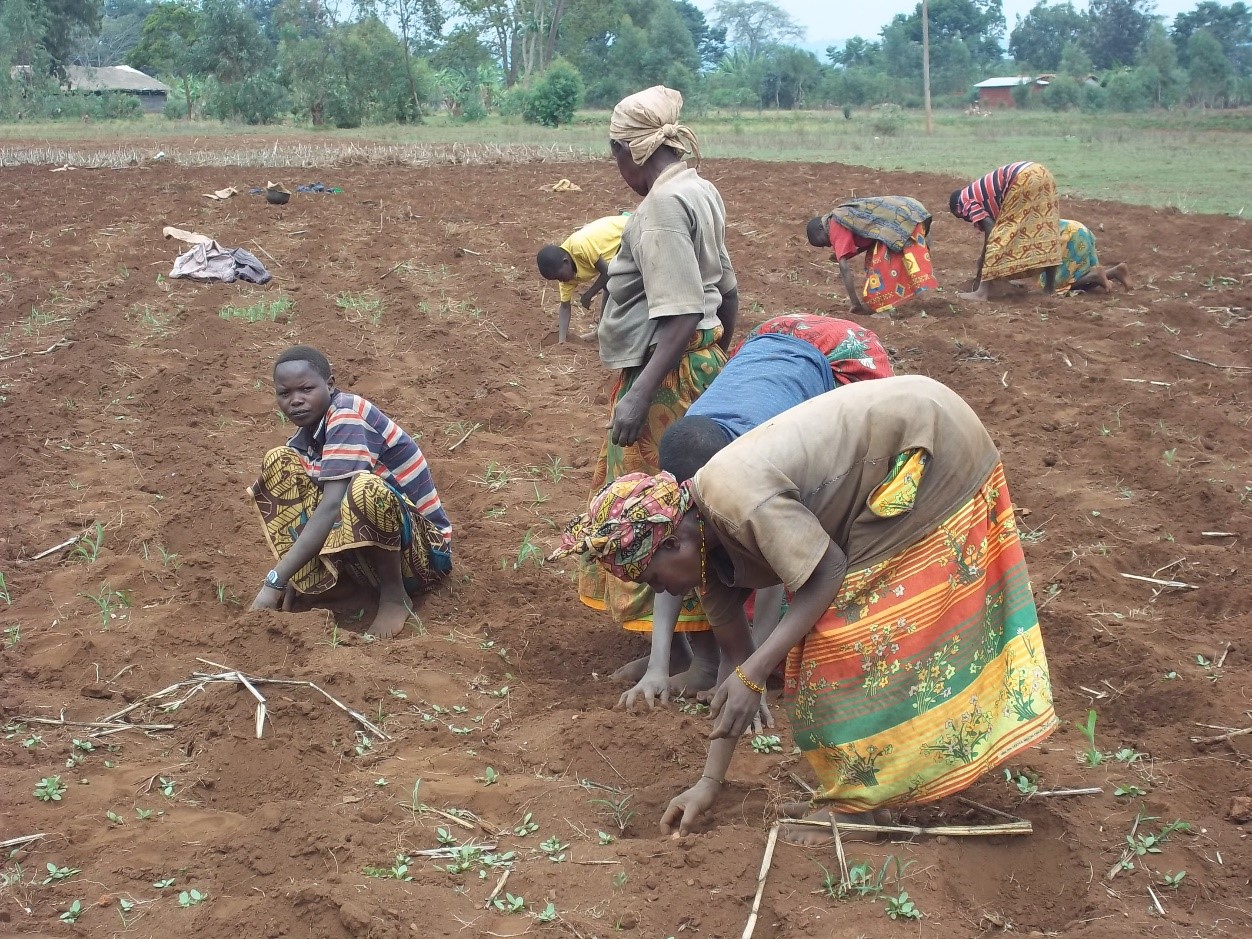
Farmers Field Schools are when the training organisation ( in the example I saw, this was Floresta) either rent or are given a plot of land that they use as a training field. A group of farmers, usually recently formed into a co-operative regularly come to this training field over a 6month to one year period, and will see demonstrations and have the opportunity to practice new techniques. They will learn from seeing how small changes can result in big improvements to yield, plant health and soil fertility. Comparative plots will demonstrate how the same seed planted with no fertilise | organic compost or manure | chemical fertiliser will perform equally as well, if not better with the organic fertiliser used.
The farmers, once they have finished the intensive training period at the FFS, are then able to take these skills back to their own farms, apply their learning, and share the knowledge with others. They become village ‘experts’ on modern farming practice.
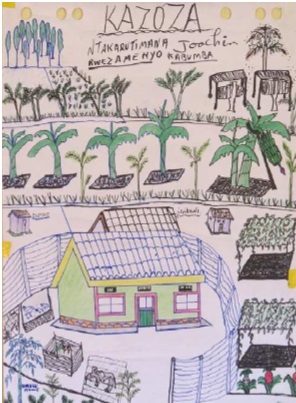 PIP is primarily used by an organisation called Alterra, and their partners, and is based on a model that was first used successfulyl with farmers in Bolivia. In this model, the community is asked to identify (based on a set of criteria) the most innovative farmers among them. Over the course of a year, this group of innovative farmers are asked to visualise in a drawing format the current status of their own farm ( what they grow, whether they have animals, how much land they work etc.) Unusually, but crucially, the whole family participates in this process. As a group they are then asked to dream of how they would like their farm to be in 5 – 10 years time. This drawing provides the basis for their PIP. Over the course of the year an agricultural expert will work with each of the farmers on a 1-1 basis to develop an action plan for achieving their visualised PIP. The expert will also work with the farming group to demonstrate modern farming and land management practive – composting, mulching, contours, agroforestry etc. , and these techniques will be further integrated into the PIP action plan for each farmer. As with the FFS model, once trained, these innovative farmers should become experts in their community, and will be able to also train others in completing their own PIPS.
Interestingly both models also have some form of micro-financing or Village savings and loans scheme running in tandem with them, as a mechanism to fund additional investment in their farming infrastructure or technique is seen as key to moving beyond straightforward food security into economic growth.
Both models have their pros and cons, so it will be interesting to see which model we end up adopting in the community we work with.